Salsa Styles Explained
Salsa is one family with several accents. A dancer from Havana, Los Angeles, New York or Cali will recognise the same music, but they move to it in different shapes, with different timing and a different sense of what looks good.
None of these styles is the correct one. Most social dancers pick up the style taught near them first and borrow from the others later.
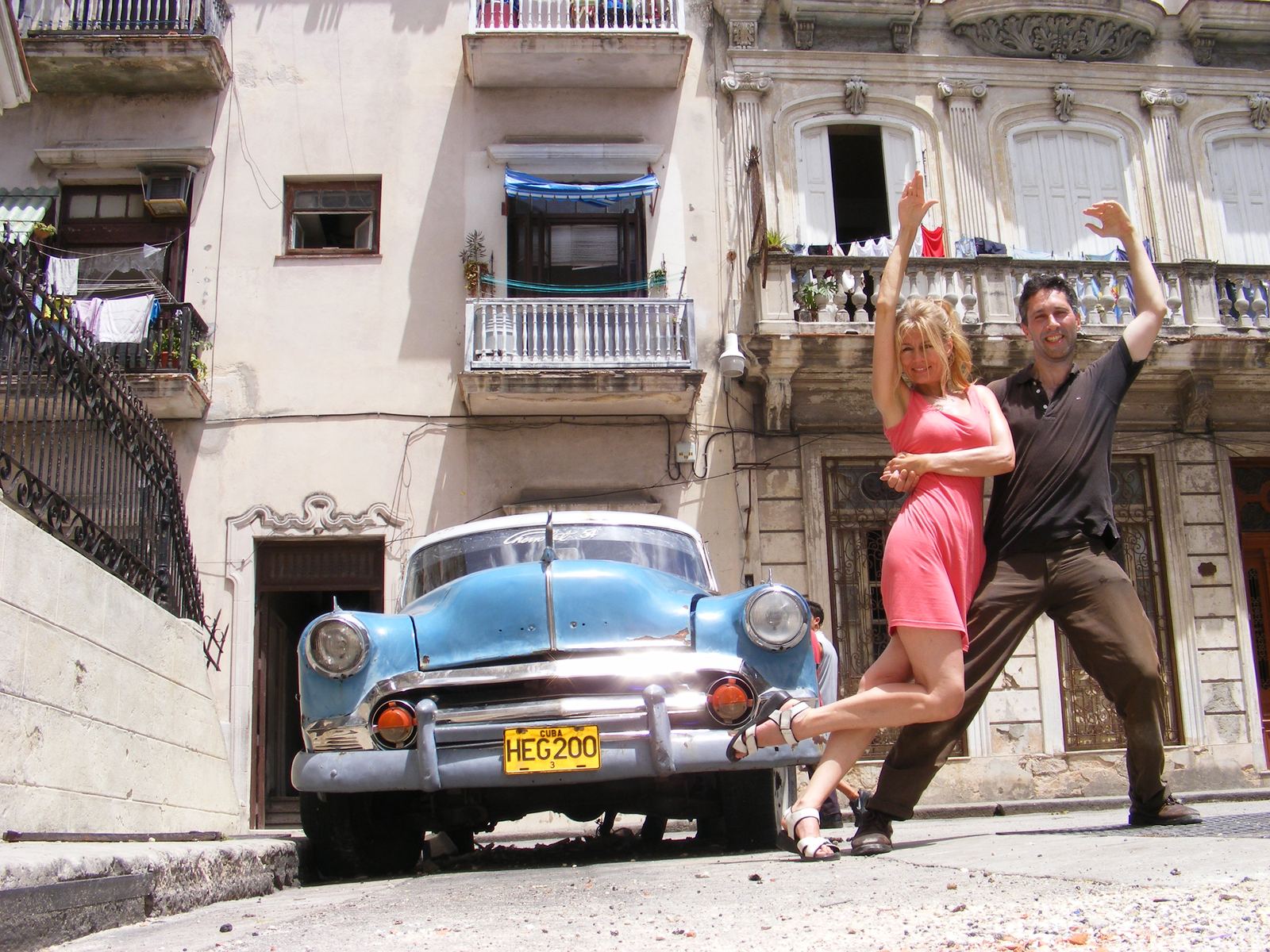
Casino on a Havana street: Anthonydpadgett, CC BY-SA 4.0
The four big styles
Cuban casino
Casino took shape in Havana's social clubs in the 1950s. Partners circle around each other instead of staying in a straight line, and the feel is grounded and playful, with lots of arm tangles and body movement. Its group form, rueda de casino, puts many couples in a wheel led by a caller.
- Timing
- On 1, often with a tap or pause
- Floor pattern
- Circular
- Feel
- Earthy, playful, social
- Signature
- Dile que no, enchufla, rueda
LA style (On1)
LA style grew in the 1990s from mambo, ballroom and show dance influences, with the Vazquez brothers among its best-known pioneers. Partners travel along a straight slot, and the style is known for fast spins, sharp accents, dips and flashy shines. Modern social LA style is calmer than the performance version that made it famous.
- Timing
- Break step on 1 and 5
- Floor pattern
- Linear slot
- Feel
- Bright, sharp, showy
- Signature
- Cross-body lead, multiple spins
New York style (On2)
New York style grew out of Palladium-era mambo in the city's Puerto Rican and Nuyorican communities. Eddie Torres did not invent dancing On2, but he organised it into a teachable method. Dancers break on the second beat, which lines up with the open slap of the conga, giving the style a smooth, laid-back groove.
- Timing
- Break step on 2 and 6
- Floor pattern
- Linear slot
- Feel
- Smooth, relaxed, musical
- Signature
- Long shine sections
Cali style (Colombian)
Cali adopted salsa records from Cuba, Puerto Rico and New York and made them its own. The style is all about the feet: tiny, rapid steps, flicks and kicks while the upper body stays fairly calm. The city's Feria de Cali, held every year from late December, opens with the Salsódromo parade.
- Timing
- Usually on 1, very quick
- Floor pattern
- Close, mostly in place
- Feel
- Fast, bouncy, joyful
- Signature
- Rapid footwork
Side by side
| Style | Home city | Break step | Floor pattern | Feel | Good for |
|---|---|---|---|---|---|
| Cuban casino | Havana | On 1 (often with a tap) | Circular | Earthy and playful | Social dancing, group rueda |
| LA On1 | Los Angeles | Beats 1 and 5 | Linear slot | Sharp and showy | Spins, performance, most US beginner classes |
| New York On2 | New York City | Beats 2 and 6 | Linear slot | Smooth and musical | Dancing with the conga, long shines |
| Cali style | Cali, Colombia | Usually on 1 | Close and compact | Fast and bouncy | Footwork lovers, fast songs |
Which style should you learn?
Start with what your local scene dances, because that is who you will be dancing with. If your city's socials are mostly On1, learn On1. If there is a strong Cuban community and rueda nights, casino will get you dancing fastest.
Timing debates can get heated online, but the basics transfer. Our New York On2 guide, which carries our Short on On1 versus On2, and the rueda de casino guide are good next steps, and the son cubano page explains where all of these styles come from.
- U.S. National Park Service: Los Angeles Salsa
- Salsa Vida: LA Style Salsa (On 1)
- Salsa Vida: New York Style Salsa (On 2)
- Salsa Vida: Rueda de Casino
- Wikipedia: Cali Fair (Feria de Cali)
- Alcaldía de Santiago de Cali: Salsódromo opens the 68th Feria de Cali
Facts on this page were checked against these sources (updated Oct 1, 2026). Spot an error? Email hello@fireempireshop.com.